
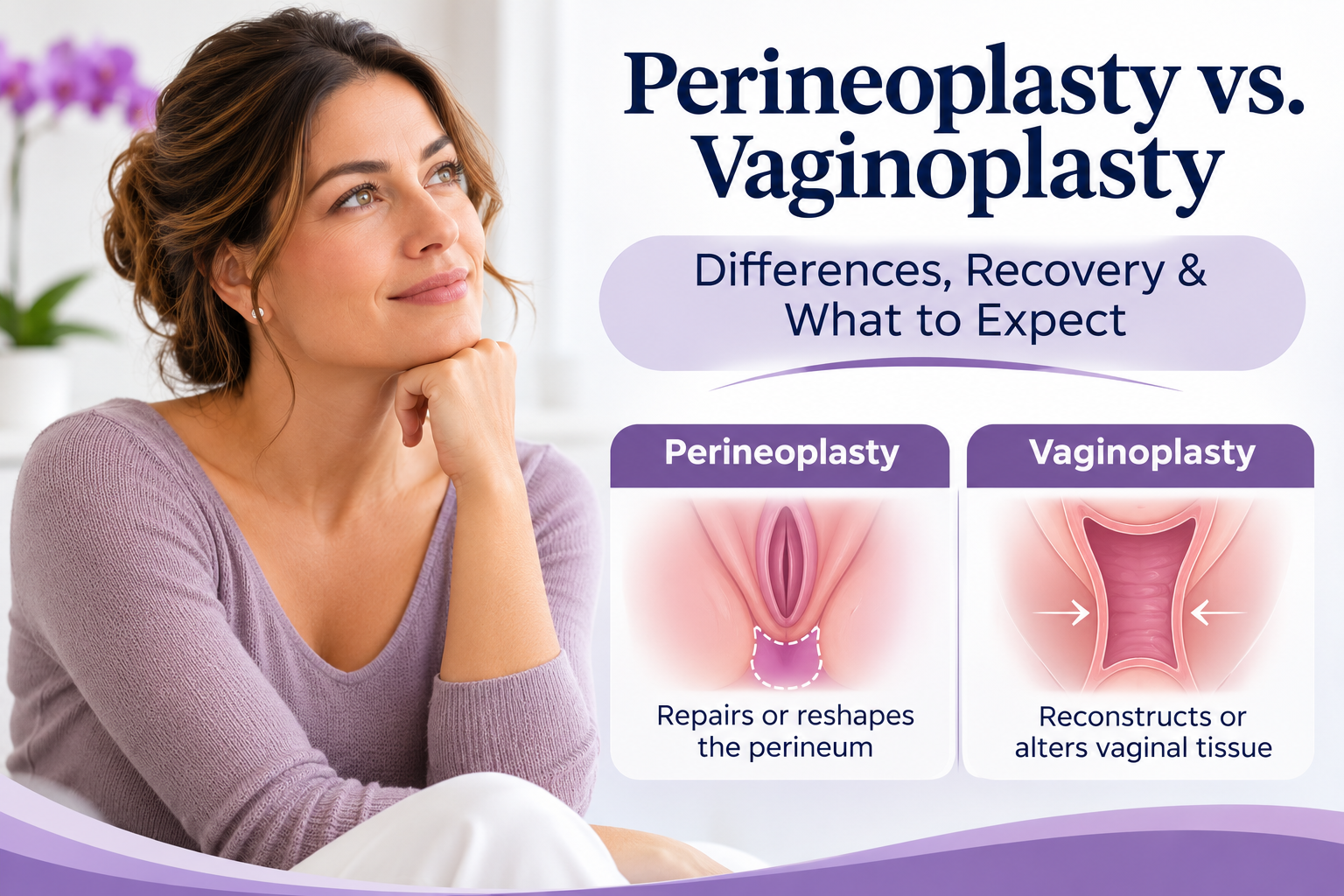
Perineoplasty vs. Vaginoplasty: Differences, Recovery, and What to Expect
Pregnancy, childbirth, aging, and previous surgeries can change a woman’s pelvic anatomy. As a result, some women experience discomfort, scar-related symptoms, or changes in the tissues surrounding the vaginal opening.
Two procedures that may address specific concerns are perineoplasty and vaginoplasty. Although both involve female genital anatomy, they focus on different areas and serve different purposes.
Understanding perineoplasty vs. vaginoplasty can help women explore their options and make informed decisions about reconstructive or cosmetic gynecological surgery.
At his South Miami practice, Dr. Jaime L. Sepulveda offers laser perineoplasty and designer laser vaginoplasty among his cosmetic gynecology services.
This guide explains the differences between these procedures, their potential indications, recovery timelines, risks, and important considerations before surgery.
What Is Perineoplasty?
Perineoplasty is a surgical procedure that repairs or reshapes the perineum. This area lies between the vaginal opening and the anus.
The perineum contains skin, muscles, and connective tissue that support the vaginal entrance. However, childbirth, injuries, and previous surgeries can affect these structures.
During perineoplasty, a surgeon may repair damaged tissue, revise uncomfortable scars, or reconstruct weakened structures.
The surgical approach depends on the patient’s anatomy, symptoms, and treatment goals.
Why Do Women Consider Perineoplasty?
Women may seek a perineoplasty consultation for several reasons, including:
- Persistent discomfort from childbirth-related scars.
- Anatomical changes following perineal tears.
- Irregular or uncomfortable scar tissue.
- Changes in support around the vaginal opening.
- Discomfort associated with certain perineal defects.
- Reconstructive concerns after previous surgery.
For example, some women experience persistent discomfort around an episiotomy scar. Others notice anatomical changes after a difficult vaginal delivery.
Nevertheless, not every postpartum change requires surgery.
Pelvic floor physical therapy, scar management, and other conservative treatments may help certain patients.
Therefore, a medical examination should identify the underlying problem before anyone considers surgery.
What Is Vaginoplasty?
Vaginoplasty refers to surgical procedures that reconstruct or alter the vaginal canal.
Unlike perineoplasty, which primarily focuses on the vaginal entrance and surrounding perineal tissues, vaginoplasty involves structures within the vagina.
Surgeons perform different types of vaginoplasty depending on the patient’s medical needs.
For instance, some procedures address specific reconstructive conditions. Others involve elective changes to vaginal anatomy.
However, patients should understand that vaginoplasty is a broad surgical term rather than one standardized operation.
The exact technique, purpose, and expected outcome depend on the individual case.
Why Might Someone Consider Vaginoplasty?
Some women request a consultation because of:
- Changes in vaginal anatomy following childbirth.
- Specific reconstructive concerns.
- Tissue injuries or previous surgical changes.
- Persistent symptoms associated with anatomical defects.
- Personal concerns about vaginal support.
However, changes in vaginal sensation do not necessarily indicate a structural problem.
Sexual function involves several factors, including pelvic floor coordination, hormones, nerve function, psychological well-being, and relationship dynamics.
Consequently, surgery cannot guarantee improvements in sexual pleasure or satisfaction.
A thorough evaluation helps determine whether a structural problem exists and whether surgical treatment could offer an appropriate solution.
Perineoplasty vs. Vaginoplasty: What Is the Difference?
The primary difference between perineoplasty and vaginoplasty involves the anatomical structures each procedure addresses.
| Feature | Perineoplasty | Vaginoplasty |
|---|---|---|
| Treatment area | Perineum and vaginal entrance | Vaginal canal |
| Primary purpose | Repair or reshape perineal tissues | Reconstruct or alter vaginal structures |
| Common concerns | Childbirth scars, tissue injuries, perineal defects | Selected vaginal reconstructive or anatomical concerns |
| Surgical approach | Localized tissue repair | Depends on the specific reconstruction |
| Recovery | Varies according to repair complexity | Depends on the procedure and tissues involved |
| Potential risks | Pain, infection, scarring, wound separation | Pain, infection, scarring, altered sensation, narrowing |
In simple terms, perineoplasty focuses on the tissue surrounding the vaginal opening, while vaginoplasty addresses the vaginal canal.
However, some reconstructive procedures may involve both areas.
For this reason, patients should ask their surgeon to explain exactly which tissues require treatment.
How Does Childbirth Affect the Perineum and Vagina?
Pregnancy and childbirth place significant pressure on the pelvic floor.
During vaginal delivery, the perineum and surrounding tissues stretch. In some cases, this stretching causes tears or other injuries.
Although most women heal without needing reconstructive surgery, some experience persistent symptoms.
These symptoms may involve scar tissue, muscle dysfunction, or anatomical changes.
Perineal Tears After Childbirth
Perineal tears range from minor skin injuries to more extensive damage involving deeper muscles.
Severe tears may affect the anal sphincter and require specialized treatment.
The severity of the injury influences recovery and long-term management.
For example, a woman with persistent pain or bowel control problems after a significant tear may need additional evaluation.
However, surgery is not always the first treatment option.
Episiotomy Scars and Discomfort
An episiotomy is an incision that a healthcare professional may perform during childbirth.
After healing, some women experience scar tenderness, tightness, or discomfort.
In certain cases, conservative treatments can improve these symptoms.
If scar-related problems persist, a clinician may discuss surgical revision or reconstruction.
Pelvic Floor Muscle Changes
Pregnancy and childbirth can also affect pelvic floor muscle strength and coordination.
As a result, women may experience urinary leakage, pelvic pressure, or discomfort during intercourse.
Importantly, these symptoms do not automatically mean that a patient needs vaginoplasty.
Pelvic floor physical therapy may improve muscle function and help address certain symptoms without surgery.
Can Perineoplasty and Vaginoplasty Be Performed Together?
Yes. In selected cases, a surgeon may recommend combining perineoplasty and vaginoplasty.
For example, a patient may have a vaginal reconstructive concern alongside a separate perineal defect.
In this situation, the surgeon may consider a treatment plan that addresses both anatomical areas.
Dr. Sepulveda’s Before & After gallery includes an example labeled Posterior Vaginoplasty and Perineoplasty Repair.
The gallery also features other procedures involving perineoplasty.
However, these examples do not mean that every patient needs combined surgery.
Combining procedures may increase surgical complexity, postoperative discomfort, and recovery requirements.
Therefore, the decision should follow an individualized examination and discussion of potential benefits and risks.
What Happens During a Consultation?
A consultation helps determine whether perineoplasty, vaginoplasty, or another treatment may address a patient’s concerns.
First, the clinician reviews the patient’s medical history and symptoms.
Next, the discussion may cover previous pregnancies, deliveries, surgeries, and pelvic floor treatments.
An appropriate physical examination can help identify scar tissue, anatomical defects, or muscle dysfunction.
What Information Should Patients Share?
Patients should discuss relevant concerns, including:
- Previous vaginal deliveries.
- Perineal tears or episiotomies.
- Pain during sexual intercourse.
- Persistent scar discomfort.
- Urinary or bowel symptoms.
- Pelvic pressure.
- Previous pelvic floor treatments.
- Future pregnancy plans.
Additionally, patients should explain how their symptoms affect everyday activities and quality of life.
This information helps the clinician understand their goals and recommend appropriate options.
Questions to Ask Before Surgery
Before choosing a procedure, consider asking:
- What specific anatomical concern have you identified?
- Is surgery medically necessary or elective?
- Could nonsurgical treatment improve my symptoms?
- Which tissues would the procedure repair or modify?
- What type of anesthesia would I need?
- What complications could occur?
- How long will recovery take?
- Could surgery change sensation or cause persistent pain?
- What results can I realistically expect?
- What happens if my symptoms continue after treatment?
Clear communication helps patients understand their choices and make informed decisions.
How Does Perineoplasty Work?
Perineoplasty techniques vary according to the patient’s anatomy and treatment goals.
During surgery, the clinician may revise selected scar tissue, repair underlying structures, and close the incision with appropriate sutures.
For instance, a reconstructive procedure may address an uncomfortable childbirth-related scar or a specific perineal defect.
Dr. Sepulveda’s practice offers Laser Perineoplasty as part of its cosmetic gynecology services.
A laser can function as a surgical cutting instrument. However, laser technology does not eliminate complications or guarantee better results than other techniques.
The surgeon’s experience, surgical planning, and postoperative care remain important.
Therefore, patients should ask why their surgeon recommends a particular approach.
How Does Vaginoplasty Work?
Vaginoplasty involves surgical reconstruction or alteration of vaginal structures.
The surgeon selects the technique according to the patient’s diagnosis, anatomy, and treatment goals.
For example, certain reconstructive procedures may repair specific tissue defects.
In contrast, elective procedures marketed for vaginal tightening require careful consideration of their potential benefits and limitations.
Dr. Sepulveda’s practice lists Designer Laser Vaginoplasty among its available services.
However, patients should request a detailed explanation of the proposed technique.
They should also understand that current evidence does not support guaranteed improvements in sexual function from elective vaginal tightening surgery.
Perineoplasty vs. Vaginoplasty Recovery
Recovery depends on the procedure, surgical technique, extent of tissue repair, and individual healing.
Additionally, combining procedures may increase recovery requirements.
Dr. Sepulveda’s cosmetic gynecology information describes approximately 10–14 days before returning to normal activities after certain surgical procedures.
The practice also describes an approximately six-week restriction on sexual intercourse.
However, these timelines are general estimates rather than guarantees.
Patients must follow their surgeon’s specific instructions.
The First Few Days After Surgery
During the initial recovery period, patients may experience:
- Swelling.
- Tenderness.
- Minor bleeding.
- Temporary discomfort.
- Sensitivity around the surgical area.
The healthcare team may recommend rest, prescribed medications, and specific hygiene measures.
Patients should also follow instructions about wound care and physical activity.
The First Two Weeks
As healing progresses, discomfort may gradually decrease.
Some patients can resume light daily activities during this period.
However, strenuous exercise, heavy lifting, prolonged sitting, and activities that create friction may remain restricted.
Recovery varies, so patients should avoid comparing their progress with someone else’s experience.
Weeks Three to Six
During the following weeks, tissues continue healing.
Swelling and tenderness may improve, although some discomfort can persist.
Furthermore, patients may need to avoid sexual intercourse and certain physical activities until their surgeon confirms adequate healing.
Long-Term Healing
Scar maturation and tissue remodeling can continue for several months.
Therefore, patients should not evaluate their final results immediately after surgery.
Follow-up appointments help the surgeon monitor healing, identify complications, and address persistent symptoms.
What Are the Risks of Perineoplasty and Vaginoplasty?
Both procedures involve surgical risks.
Although many patients recover without major complications, problems can occur.
Potential risks include:
- Bleeding.
- Infection.
- Delayed wound healing.
- Wound separation.
- Scarring.
- Persistent or new pain.
- Pain during sexual intercourse.
- Changes in sensation.
- Excessive narrowing or tissue tension.
- Dissatisfaction with the outcome.
- Need for additional surgery.
Additionally, surgery may not improve symptoms caused by hormonal changes, nerve-related pain, or pelvic floor dysfunction.
For example, a patient experiencing pain from excessive pelvic floor muscle tension may need physical therapy rather than anatomical reconstruction.
Therefore, an accurate diagnosis is essential before surgery.
Are There Nonsurgical Alternatives?
Yes. Depending on the underlying condition, several nonsurgical treatments may help.
Pelvic Floor Physical Therapy
Pelvic floor physical therapy can improve muscle coordination and address selected causes of pelvic discomfort.
For example, treatment may focus on muscle weakness, excessive tension, or movement patterns that contribute to symptoms.
Additionally, physical therapy can support postpartum recovery.
Scar Management
Some patients experience discomfort from childbirth-related scars.
Depending on the clinical findings, treatment may include scar mobilization, physical therapy, or other clinician-directed approaches.
These options may reduce symptoms without requiring another operation.
Treatment for Vaginal Dryness
Hormonal changes, particularly during menopause, can contribute to vaginal dryness and discomfort.
In some cases, moisturizers, lubricants, or prescribed treatments may improve symptoms.
However, treatment should reflect the patient’s medical history and underlying condition.
Evaluation of Pelvic Pain
Pain during intercourse can have several causes.
These include pelvic floor dysfunction, dermatological conditions, nerve-related pain, and other gynecological disorders.
Consequently, identifying the source of discomfort is more important than assuming surgery will resolve it.
Perineoplasty vs. Labiaplasty
Patients sometimes confuse perineoplasty with labiaplasty.
However, these procedures address different anatomical areas.
Perineoplasty repairs or reshapes the perineum and tissues surrounding the vaginal entrance.
Labiaplasty, on the other hand, changes the size or shape of the labia, most commonly the labia minora.
Although a surgeon may combine these procedures in selected cases, they serve different purposes.
Dr. Sepulveda’s gallery includes examples labeled Designer Laser Labiaplasty with Perineoplasty Repair.
Nevertheless, the presence of combined procedures in a photo gallery does not establish that every patient needs multiple operations.
Before and After Photos: What Should Patients Know?
Before-and-after photographs can help patients understand certain anatomical changes following reconstructive procedures.
Dr. Sepulveda’s surgical gallery includes examples of:
- Perineoplasty Repair.
- Posterior Vaginoplasty and Perineoplasty Repair.
- Designer Laser Labiaplasty with Perineoplasty Repair.
- Posterior Repair (Rectocele) with Perineoplasty Repair.
View the Before & After Gallery
Clinical image notice: The gallery contains sensitive medical photographs intended for adult audiences. Individual results vary.
Although photographs can illustrate visible anatomical changes, they cannot demonstrate every aspect of treatment success.
For instance, images cannot confirm whether a patient experienced reduced pain, improved sexual function, or long-term symptom relief.
Therefore, patients should consider photographs as educational examples rather than guarantees of similar outcomes.
How Much Do Perineoplasty and Vaginoplasty Cost in Miami?
The cost of perineoplasty or vaginoplasty depends on several factors.
These may include:
- The specific surgical procedure.
- The complexity of the repair.
- Anesthesia requirements.
- Facility fees.
- Surgeon fees.
- Additional procedures.
- Postoperative care.
For example, combining two procedures may affect the total surgical cost.
Most procedures performed primarily for cosmetic reasons do not qualify for insurance coverage.
However, insurance policies may cover certain medically necessary reconstructive procedures when patients meet the applicable criteria.
A consultation can help clarify the proposed treatment and associated costs.
How to Choose a Gynecological Surgeon in Miami
Choosing a surgeon requires careful consideration.
First, patients should review the clinician’s qualifications and experience with the proposed procedure.
Next, they should discuss the expected benefits, possible complications, and available alternatives.
Additionally, patients should ask about postoperative care and how the surgical team manages complications.
A responsible consultation should address normal anatomical variation and realistic expectations.
Most importantly, patients should never feel pressured to undergo surgery for changes that do not cause symptoms or personal concerns.
The decision should reflect individual goals, medical findings, and a clear understanding of potential risks.
Perineoplasty and Vaginoplasty in South Miami
Dr. Jaime L. Sepulveda provides cosmetic gynecology and female pelvic medicine services in South Miami, Florida.
His practice offers Laser Perineoplasty and Designer Laser Vaginoplasty among its surgical procedures.
During a consultation, patients can discuss their concerns, review their medical history, and explore appropriate treatment options.
The evaluation may help determine whether reconstructive surgery, conservative management, or another approach best addresses their needs.
Learn more about the practice’s Cosmetic Gynecology Services.
Frequently Asked Questions About Perineoplasty and Vaginoplasty
Is perineoplasty the same as vaginoplasty?
No. Perineoplasty focuses on the perineum and vaginal entrance. In contrast, vaginoplasty involves reconstruction or alteration of the vaginal canal.
Can perineoplasty help with childbirth-related scars?
Yes, in selected cases. Perineoplasty may address persistent symptoms or anatomical concerns associated with childbirth scars. However, many patients benefit from conservative treatment instead.
Is vaginoplasty necessary after childbirth?
No. Childbirth-related changes do not automatically require surgery. Instead, a medical evaluation can help determine whether symptoms involve scar tissue, muscle dysfunction, prolapse, or another condition.
Can surgeons combine perineoplasty and vaginoplasty?
Yes. A surgeon may combine these procedures when specific anatomical findings justify treating both areas. However, combined surgery may increase risks and recovery requirements.
How long does recovery take?
Recovery varies according to the procedure and individual healing. Generally, patients may need several weeks of activity restrictions. Complete tissue healing can take longer.
Can these procedures improve sexual satisfaction?
Improvement is not guaranteed. Sexual function depends on multiple factors, and evidence supporting elective surgery specifically to improve sexual satisfaction remains limited.
Will there be visible scars?
Surgical incisions can produce scars. Their appearance depends on the technique, incision location, and individual healing.
Does insurance cover perineoplasty or vaginoplasty?
Insurance generally excludes procedures performed primarily for cosmetic reasons. However, coverage may apply to certain medically necessary reconstructive procedures, depending on the policy and clinical circumstances.
Are laser techniques safer than traditional surgery?
Not necessarily. Although lasers can help surgeons cut tissue, they do not eliminate surgical risks or guarantee better outcomes.
How can I determine which procedure is appropriate?
A qualified clinician can review your symptoms, examine the relevant anatomy, and explain the available treatments. As a result, you can make a more informed decision about whether surgery is appropriate.
Schedule a Private Consultation in South Miami
Persistent perineal discomfort, childbirth-related tissue changes, or concerns about vaginal anatomy deserve an individualized evaluation.
Fortunately, several treatment approaches may help, depending on the underlying condition.
Dr. Jaime Sepulveda offers cosmetic and reconstructive gynecology services in South Miami, Florida.
During your consultation, you can discuss your symptoms, ask questions, and learn about potential surgical and nonsurgical options.
Dr. Jaime L. Sepulveda MD
6200 Sunset Drive, Suite 501
South Miami, FL 33143
Phone: (305) 669-6267
Contact the Office to Request an Appointment
Medical Disclaimer: This article provides general educational information and does not replace professional medical advice, diagnosis, or treatment. Every surgical procedure involves potential risks. A qualified healthcare professional should evaluate your individual circumstances before recommending treatment.